Metabasis by Data Reply · The AI data development lifecycle
From first assessment to live data product. With AI doing the heavy lifting.
Metabasis reads your estate, designs the models, writes the pipelines and checks the numbers. Your team approves every step, and every step is kept as evidence.
One lifecycle. AI at every stage.
Pick a stage to see what Metabasis does, what your team decides and what you keep.
- Connects read-only to Postgres, MySQL, SQL Server, Snowflake, Databricks and BigQuery
- Profiles every column and reads files and cloud buckets
- Parses Qlik and MicroStrategy exports and SQL, SAS and .NET code
- Choose the sources and the scope
- Catalogue
- Column profiles
- Estate inventory
What it looks like in use
Real screens from Metabasis, on a synthetic 5,000-app Qlik estate and a sample project. No mock-ups.
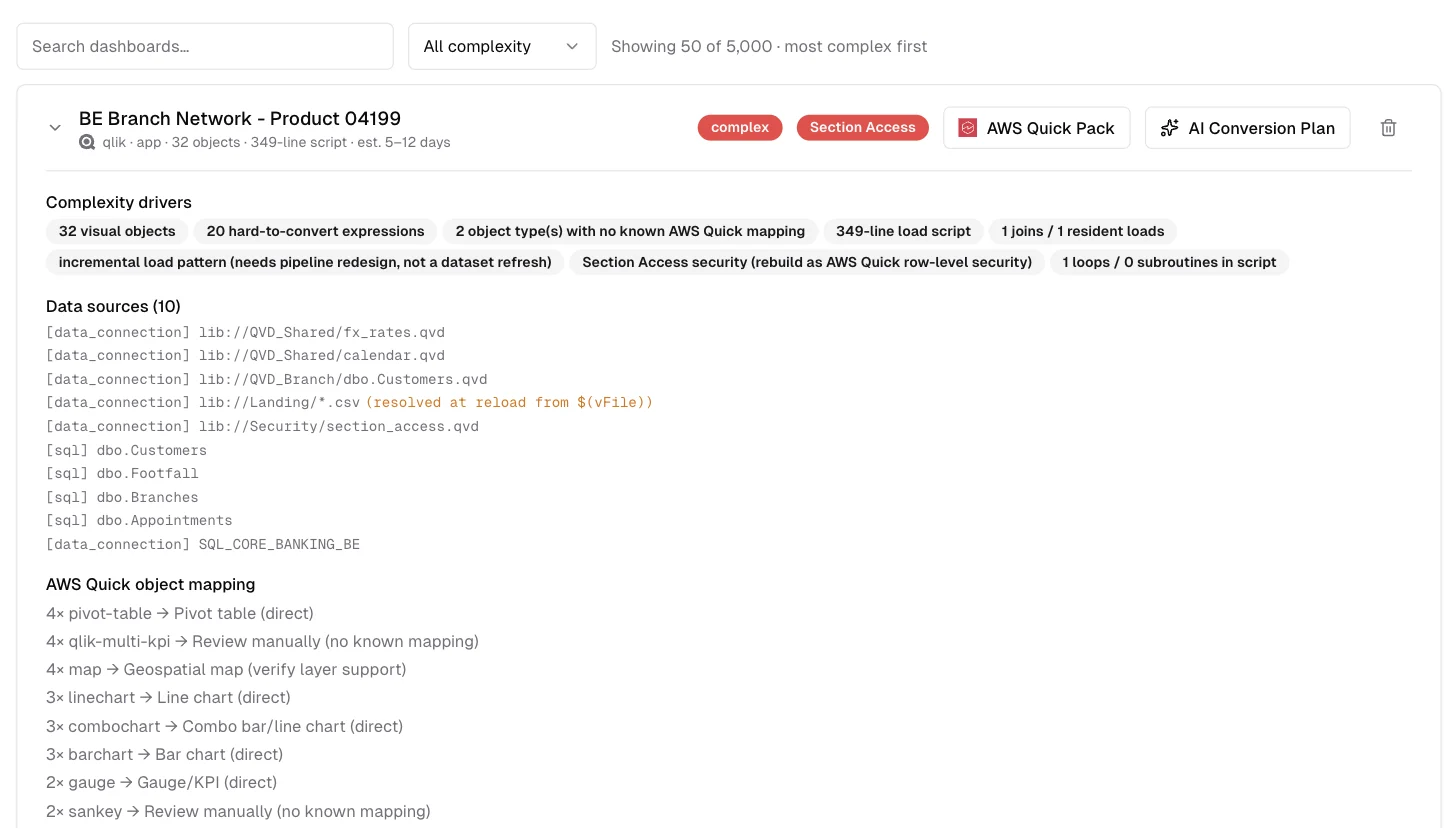
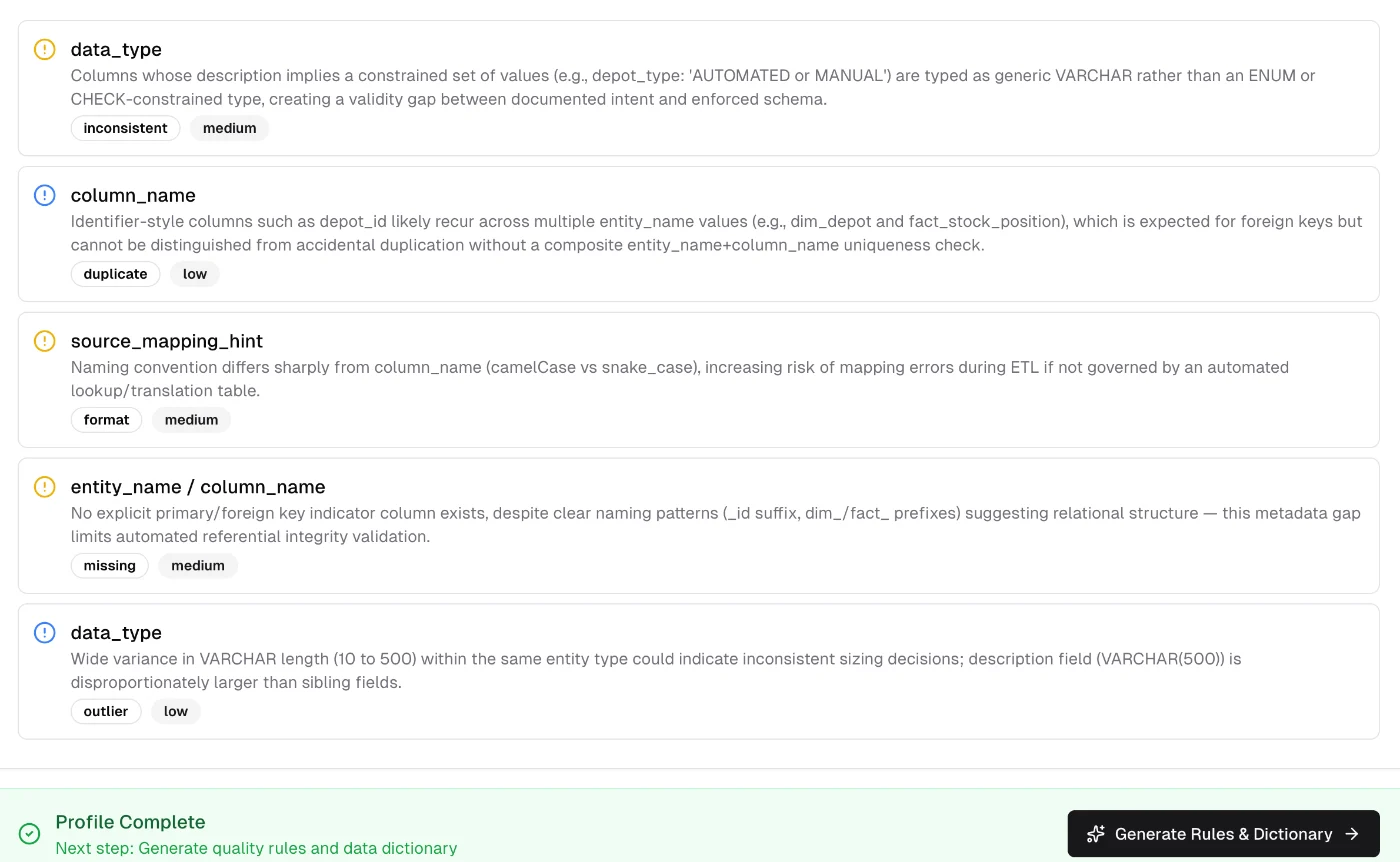
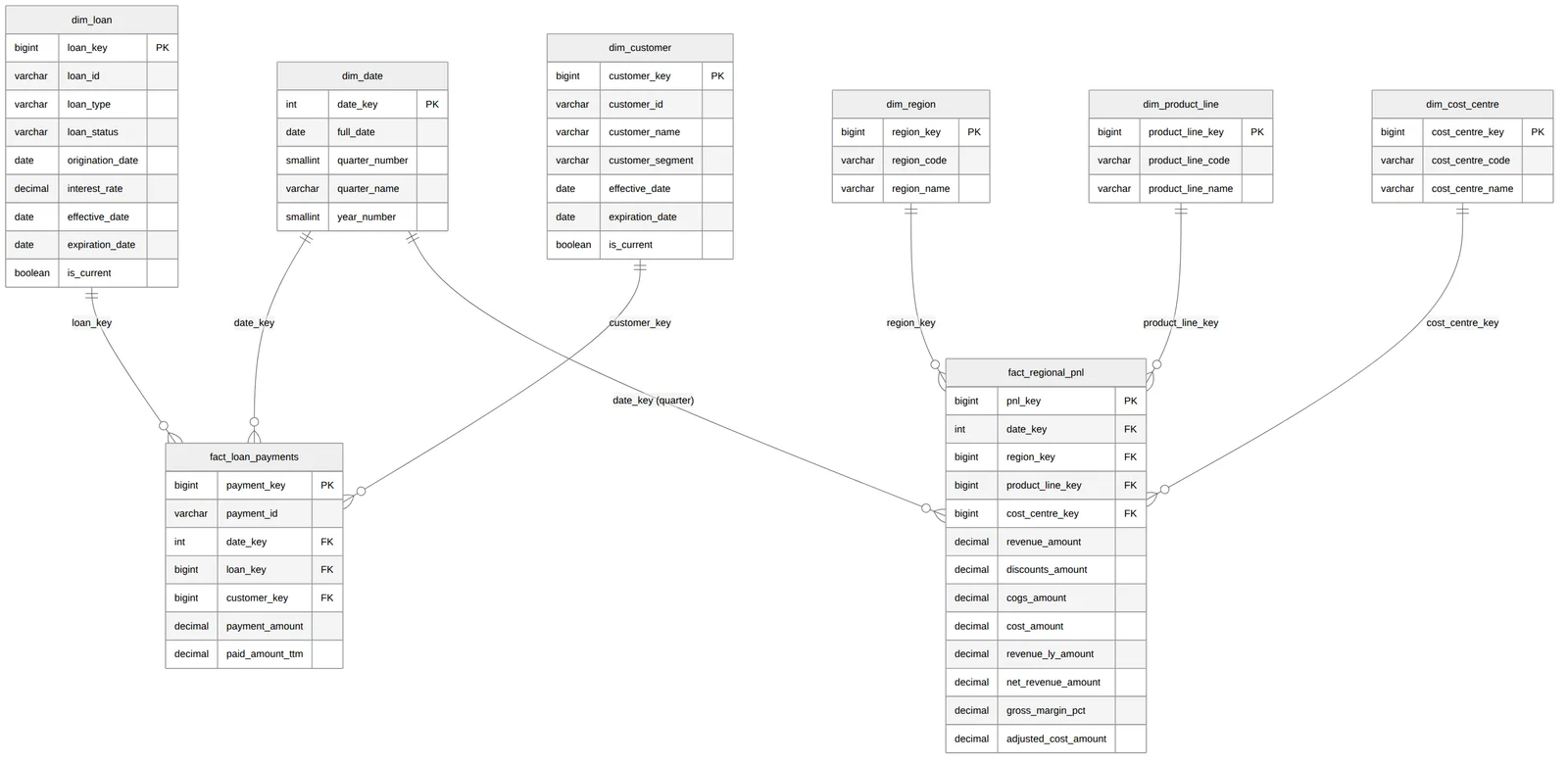
Three ways in
Start wherever you are. All three run on the same lifecycle, so an assessment becomes a build plan and a migration ends as a governed platform.
Assess
Know where you stand before you spend.
Leaders asked to back AI, a platform or a migration with evidence.
- AI and data readiness, with ROI per use case
- A warehouse you inherited, profiled and documented
- A BI estate inventoried and triaged
Discover · Assess
Assess use casesBuild
Ship data products, not just pipelines.
Platform and data teams delivering on Databricks, Snowflake, Redshift or Synapse.
- Medallion platforms with change control
- Data products with contracts and quality rules
- Models and DDL designed from profiled data
Design · Build · Validate · Operate
Build use casesMigrate
Move without losing the logic.
Teams leaving a BI tool, a warehouse or legacy code behind.
- Qlik and MicroStrategy to Amazon Quick
- Legacy warehouses and SQL, SAS or .NET logic
- Every migrated number reconciled to the source
Discover · Assess · Design · Build · Validate
Migrate use casesReads from and delivers to the platforms you already run
- Qlik
- MicroStrategy
 Amazon Quick
 Amazon Redshift
 Amazon S3
- Snowflake
- Databricks
 Google BigQuery
 Azure Synapse
 SQL Server
- PostgreSQL
- MySQL
 Azure Blob Storage
 Google Cloud Storage
AI you can put in front of an auditor
Built for banks, insurers and other teams who have to explain how a number was produced.
How it is builtDeterministic first
Parsers, profilers and lineage are ordinary code: the same input gives the same answer. AI is used where judgement helps.
Agents propose, people approve
Every model, rule and line of generated code is a proposal with its reasoning. Nothing is applied until someone accepts it.
Evidence by default
Every run, version and approval is recorded with who and when, so the audit trail is a by-product of the work.
Your data stays put
Connectors are read-only. Agents see metadata, profiles and scripts, not whole tables. A project can use its own model endpoint.
Case study · YouGov Sport
A sponsorship analytics platform moved from legacy .NET and SQL to AWS in 11 weeks
Four agents, the same capabilities now in Metabasis, mapped the legacy estate, converted the .NET and SQL, designed the medallion layers and orchestrated the build on Amazon Redshift and Amazon Quick.
Read the case study on reply.comTell us where you are. We will show you the lifecycle on your problem.
30 minutes with the team that built Metabasis. No slides.
- Is Metabasis software or a service?
- Both. It is the platform Data Reply's teams deliver with. You can work alongside them, or use it with your own team on a plan.
- What is the AI DDLC?
- The data development lifecycle (discover, assess, design, build, validate, operate) with AI agents doing the work at every stage and people approving it. Metabasis runs all six stages in one place.
- Which AI models does it use?
- Claude by default. A project can point at its own endpoint, such as Azure OpenAI, instead.
- How do we start?
- Book 30 minutes. We look at your situation together and agree whether to begin with an assessment, a build or a migration.